Yearly tuition
US$32,104 – US$57,484
Non-resident / international undergraduate tuition and fees at five of the six universities compared (2026–27; Michigan State 2025–26). Texas A&M’s tuition split is not verified yet.
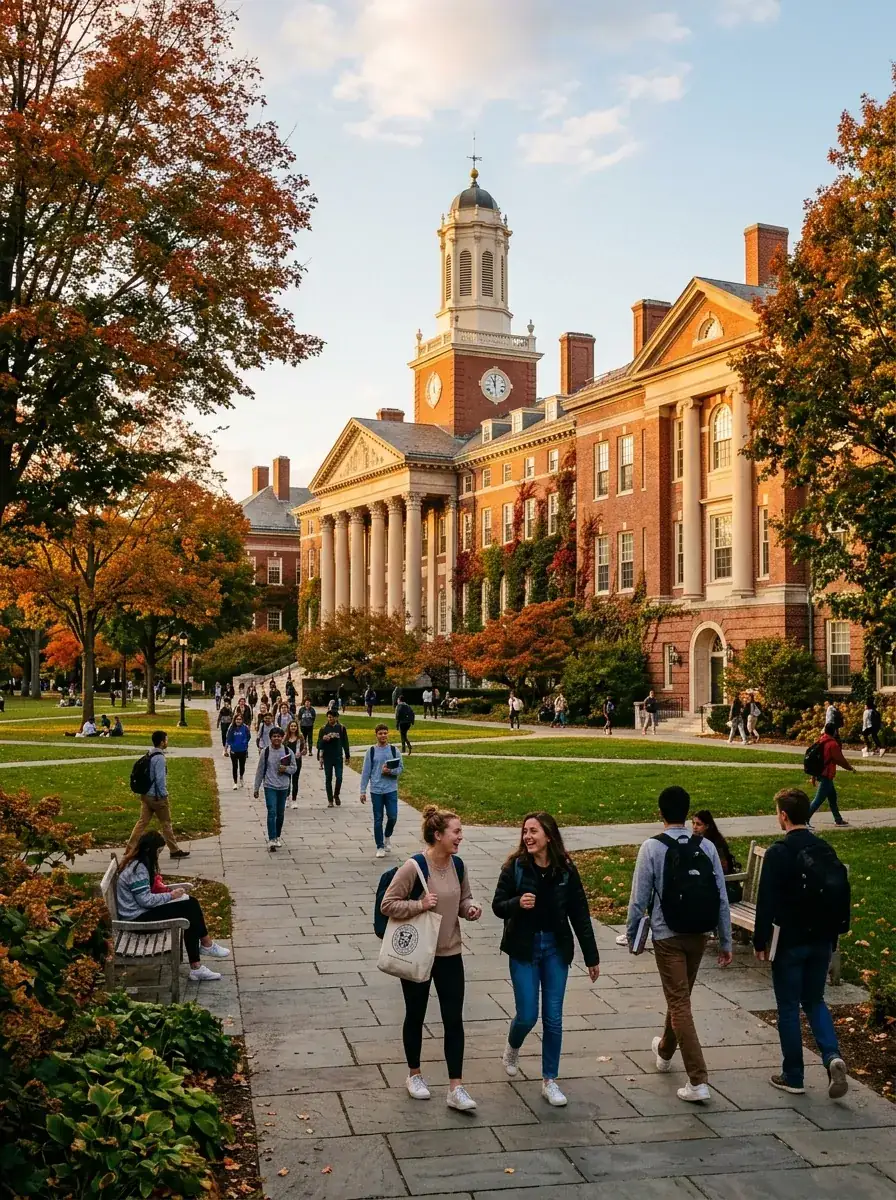
US universities publish their full yearly costs. Compare them side by side, then build an application that fits your profile and budget.
Every figure below comes from an official university or government page, with the year shown. Where we could not verify a figure, we say so.
Non-resident / international undergraduate tuition and fees at five of the six universities compared (2026–27; Michigan State 2025–26). Texas A&M’s tuition split is not verified yet.
Yearly housing and food estimates published by the universities; they vary by city and housing type. The full cost of attendance — tuition, housing, books, transport and insurance — is US$62,272–86,490.
F-1 students may work on campus while classes are in session. Off-campus work is not allowed in the first academic year; later options include practical-training programs such as CPT and OPT.
After completing a degree, F-1 graduates can apply for up to 12 months of Optional Practical Training. Graduates of eligible STEM degrees can apply for a 24-month extension through an E-Verify employer.
Purdue and UCLA do not award scholarships to international undergraduates. Michigan State offers US$3,000–15,000 merit awards, Arizona State US$3,000–10,000, Berkeley considers admitted students for institutional scholarships automatically, and Texas A&M runs an international freshman scholarship application (December 1).
Requirements range from IELTS 6.0 (Texas A&M, Arizona State) to competitive scores of 7.5+ at UCLA. TOEFL iBT moved to a new 1–6 scale on January 21, 2026 — check which scale each university uses.
Figures verified from official pages on September 25, 2026. Tuition and rules change every year — confirm on the linked pages before you decide.
Six universities: two in the QS top 50 as the ambitious option, and four ranked roughly 100–200 as realistic choices. Pick two or three to see how they differ on cost, language requirements, scholarships and selectivity.
Students who study full-time at a US university normally need an F-1 visa. The university issues the Form I-20 that starts the process.
The SEVIS fee is from ICE. The US$185 visa application fee is the published F-1 rate but could not be re-checked on travel.state.gov today — confirm both before paying, as fees can change. ICE: SEVIS · travel.state.gov
Honest answers — including what Study House cannot promise.
Official 2026–27 estimates for international undergraduates at the universities in our table run from about US$62,000 to US$86,000 a year including tuition, housing, food, books and insurance. Tuition alone is US$32,104–57,484 at the five universities with published figures. Several universities offer international undergraduates little or no scholarship money, so check the table before you shortlist.
Study House cannot give a safety rating for a city or campus. US universities publish campus security information and run international student offices — check these for each shortlisted university, follow your government’s travel advice, and ask us to help you compare cities on cost and student support.
A refusal is not always the end. The embassy gives a reason, and you may be able to reapply with stronger evidence, for example clearer proof of funds or of your study plan. Visa application fees are generally not refunded. We can go through the refusal reason with you, but the embassy makes the final decision.
No. Study House cannot guarantee admission or a visa. Universities decide admission and embassies decide visas. What we do is help you choose realistic universities, prepare a complete application and avoid mistakes that can be avoided.
Leave your phone number or Telegram username in the booking form and we will contact you through it. At your first consultation, tell us how and how often you want to receive updates.
Only in limited ways. F-1 students may work on campus for up to 20 hours a week during classes, and off-campus work is not allowed in the first academic year. Do not plan to pay tuition from work income — universities and visa officers expect proof that you can fund your studies.
Tell us your budget, grades and subject. We will help you narrow the table to the universities that fit — and we will be honest about the ones that do not.
Get my personal shortlist →